
Leapin’ Language! Exploring the Link Between Communication Development and Physical Activity
One of the great things about supporting your child’s communication development is that you don’t need to find more time in your busy schedule to do it! The best language learning happens within the activities that your child already enjoys and the routines you already do together.
Likely one activity your child enjoys is playing outdoors. And when children run, climb, swing or slide, they usually have something they really want to say. So, what is the connection between outdoor physical activity and children’s language and communication abilities?
While we know lots about how physical activity affects children’s health in many areas, this particular question is not studied directly as often in research. A recently published research review explores exactly this, with some encouraging conclusions. Let’s take a closer at how language learning and physical activity go together, and what this means for supporting your child’s communication development at home.
Reading into the research
Out of more than 1500 studies of children from around the world published since 2021 that were considered for this review, only seven discussed the connection between physical activity and early language learning directly.
In total, the seven studies gathered information from:
- 400 young children (ages 2-7)
- 13 speech-language pathologists/therapists
The children in these seven studies primarily had typically developing communication skills, or had language difficulties.1 One study included 3 autistic children.1
What the studies found
Here are four of the most important findings that emerge from this research review:
- Physical play sets children up for communication success
Several of the studies highlight how physical play activities are important opportunities for young children to learn and practise their language skills1
- The great outdoors!
Two of the seven studies focused on children’s physical play outside. These studies found that:- Children communicate more complex ideas and use longer sentences when they engage in outdoor physical activities1
- Children are more likely to use language skills in nature-based play environments1
- Opportunities for (additional) language learning
One study focused particularly on children who were learning an additional language. That is, they spoke a different language at home than at preschool. Results showed that children who are learning an additional language are more likely to practise their skills in that new language during free play, including during physical activities
- Building friendships
One of the studies looked at the interactions between three young autistic children and their peers during physical play. Because the study included only three autistic children, its results should be treated with caution. Nevertheless, the study notes how physical activities were important opportunities for autistic children to build on their communication skills by interacting with peers
Bringing the research home
Overall, this review of the research finds that: “children with more physical activities tend to have positive outcomes on their language development” (Kamelia et al., 2025, p.623). These positive outcomes include children’s improved abilities to use their communication skills more often and using more complex vocabulary and sentences.
The seven studies focused on children in preschool settings, where they were interacting with other children or their educators. So, what does this research mean for you as a parent when supporting your child’s communication skills at home?
These studies show how physical activities are good opportunities for children to practise their communication skills. This fits well with the Hanen approach, which is all about building young children’s communication skills during fun, back-and-forth interactions with others, especially their parents.
Follow your child’s lead
Follow your child’s lead is a key Hanen strategy that you can use support your child’s communication skills when you are on the go!
Children are most motivated to communicate when adults follow their interests, so Follow Your Child’s Lead as you engage in physical activities that they enjoy.
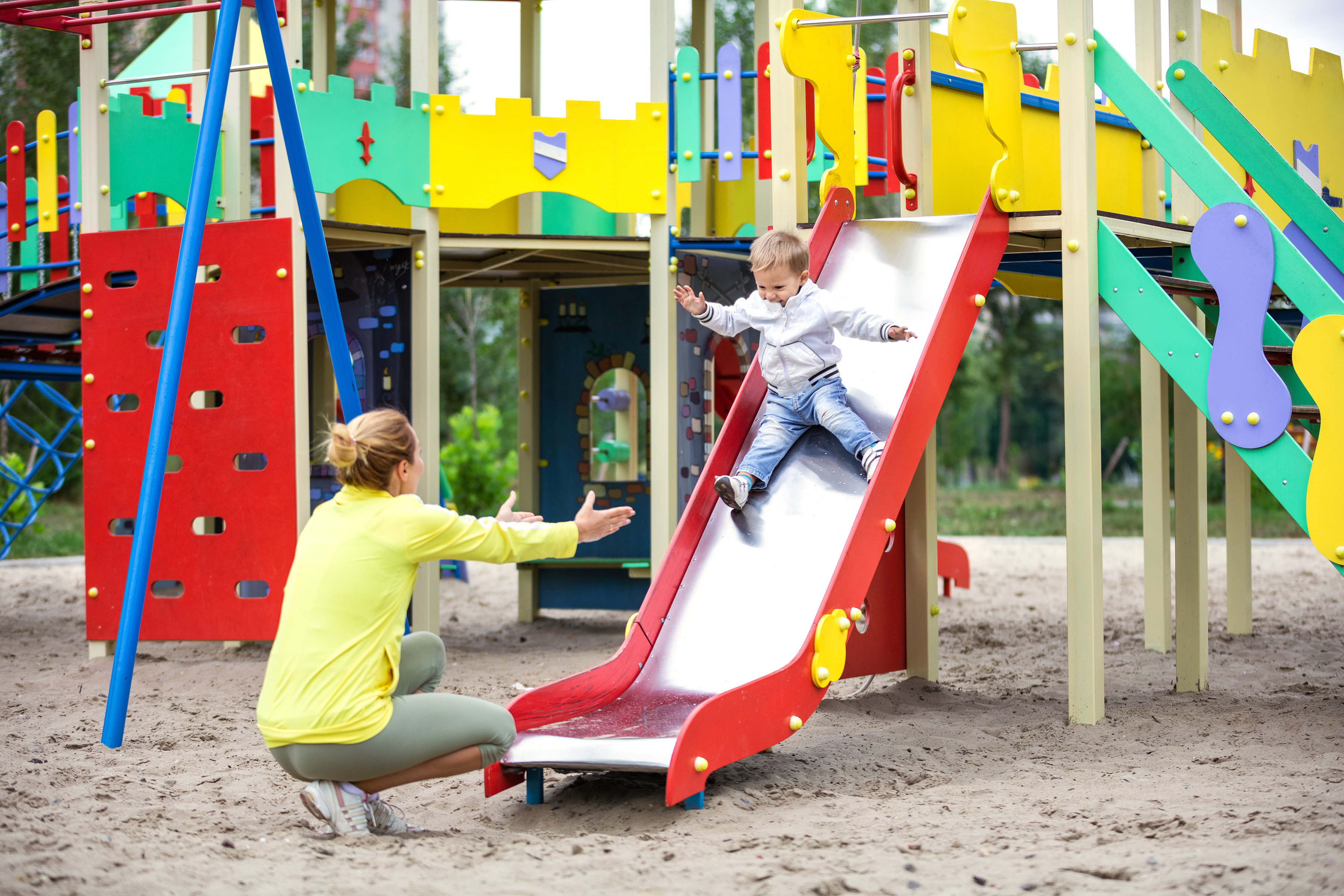
For example, if your child enjoys playing on the slide, swinging, playing “chase,” climbing, or digging, you can get down to your child’s level and wait without talking to give them a chance to start the interaction and/or share their interests.
Then, Follow Your Child’s Lead! This means responding right away and showing your interest in what your child has communicated. There are many ways to follow your child’s lead, all of which encourage them to stay in the interaction and communicate again. You could:
- Respond with interest to what your child communicates
If your child is on the swings and they smile and kick their legs, you could say, “You love swinging!” - Imitate what your child does
If your child makes a “grrrr” sound as they chase you, copy them by making the same fun sound. This is likely to keep their attention, and they may laugh, smile or make the sound again. - Build playfully on what your child says or does
If your child likes to go down the slide and they say, “Go!” just before they slide down, you can say, “Okay! Go down the slide!”.
Each time you follow your child’s lead, make sure you wait again to see what your child says or does next. As you engage with your child during physical play activities, it’s also important to remember that you start by responding to how they communicate right now. It’s not necessary for your child to repeat what you say; what matters most is that you follow their lead and provide many opportunities for them to hear the language that relates directly to what they are interested in.
Want to learn more about supporting your child’s communication during physical play activities? You can find even more in-depth discussion about how to make the most of the activities your child enjoys in our parent guidebooks. These illustrated, practical books provide you with the guidance and tools to make the most of your child’s opportunities to develop more advanced communication and language skills. |
 For parents of children
 For parents of autistic children, or
children who may benefit from social communication support
Similar articles by tag:
Language Development | Play | Research Summary | Outdoor Play | Follow Your Child’s Lead