
Turning Little Books into Big Conversations
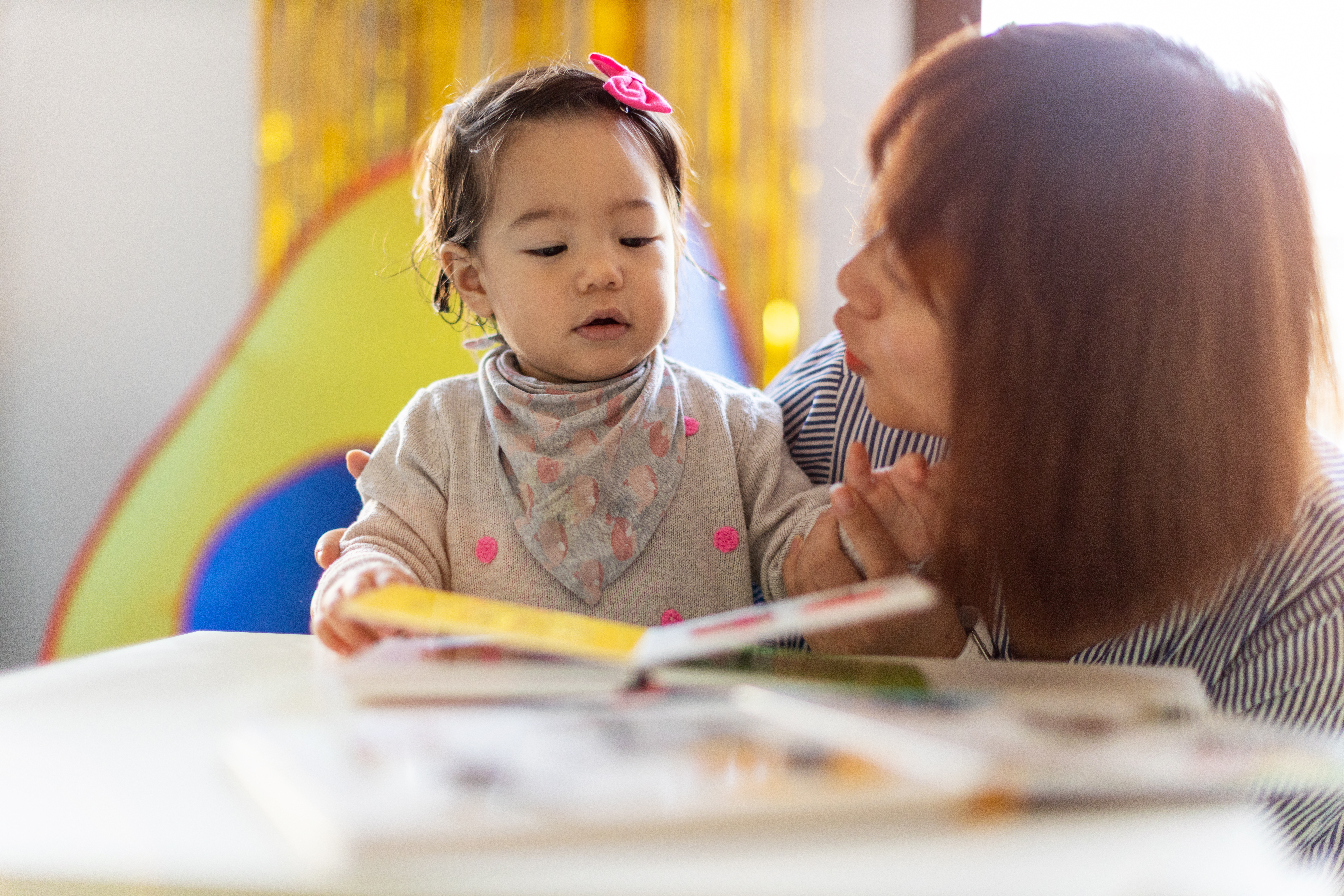
Children gain the most from sharing books with an adult when they’re actively involved – when book time becomes a back-and-forth conversation. What does this mean? It means you’re not just reading to your child; you’re reading with them. When this happens, your child does a lot more than listening as you read – they point out and share things of interest to them and this turns into a conversation.
You might be wondering why turning book reading into a conversation is so important. There are many reasons, which include:
- Creating a connection: Involving your child turns reading into a special time for the two of you to connect.
- Building your child’s understanding: Talking about what interests your child often leads to your using new words and introducing new ideas that increase their general knowledge [1].
- Building your child’s vocabulary: When you read a book and use unfamiliar words that relate to what your child is interested in, you add new words to their vocabulary [2].
Here are five ways to turn book reading into a conversation:
1. Get face to face
When sharing books, get face to face as much as possible. When you are face to face:
- You can see what your child is looking at and communicating about
- You’re able to notice the turns your child takes without words, like using a gesture or making a facial expression
- You make it easier for your child to see your face and to connect with you
You might get face to face by lying on the floor opposite your child with the book between you, or by sitting face to face on the couch. If your child likes to be on your lap as you read, try turning them sideways.
2. Let your child “read” the book their way
As adults, we tend to start a book on the first page and read page by page to the end. However, children often enjoy exploring the book and they don’t go from beginning to end – they may start in the middle, then go backwards, then flip to the end. Letting your child “read” the book their way means letting them decide what they want to look at and communicate about. You may notice that your child enjoys coming back to the same page over and over again – and that creates a great opportunity to keep talking about what interests them.
3. Observe, Wait and Listen™ on each page
You may be used to reading the book while your child listens. But to help your child become more involved in book reading, let them take the lead. How do you do this?
Observe, Wait and Listen™ for your child to start the interaction. This means that every time you or your child turns the page, you wait without speaking to give them a chance to communicate. While you wait, observe what your child is interested in and listen for their message.
What you are waiting for depends on your child and how they usually communicate. They may look at you, use a gesture (e.g., pointing to a picture on the page), make a sound, use words or use a combination of these.
It may take some time for your child to do or say something when you show them a page and wait, especially if they are used to you taking the lead. Wait up to 10 seconds to give your child a chance to communicate. If, after 10 seconds they don’t take a turn, make a comment about something they are looking at or interested in and keep reading.
4. Follow your child’s lead
Once your child communicates and takes a turn, follow their lead. This encourages them to stay in the interaction with you. There are many ways you can follow your child’s lead when you’re sharing books:
- Imitate: Copy what your child says or does. For example, if your child touches something soft on the page, imitate by touching the same thing. If they make a sound, imitate the sound.
- Interpret: Interpret your child’s message by putting into words what you think they are trying to tell you. For example, if your child takes a turn by pointing to a dog on the page and making a sound, interpret their message by saying, “Yes that’s a dog!” if that’s what you think they mean. If your child uses words, interpret their message by using a more complete sentence. For example, if your child points to a bus that has lots of people in it, and says, “bus”, you can interpret by saying, “The bus has so many people in it!”
- Make a comment: When your child takes a turn, respond with a comment that directly relates to what they’ve communicated. For example, if your child sees a dinosaur on the page and says, “roar”, you could say, “That dinosaur made a big roar!”.
- Ask a question: You can also follow your child’s lead by asking a question related to what they’ve communicated. For example, if your child points to a bird flying, you might ask a question like, “Where’s the bird flying to?” Try to ask a question that shows you are genuinely interested in what your child has just communicated. Try not to ask questions that test your child like, “What’s that?”
5. Change the words in the book
Instead of reading word for word what is written on each page, change the words so the book is easier for your child to understand. Repeat the words that capture what your child is interested in and use them in short, grammatical sentences as they occur naturally throughout the book. Emphasize these words by saying them louder or stretching them out (e.g., “That’s a huuuuuge dog”). Show the meaning of the words by pointing to pictures and using gestures or actions. Then, wait again to see if your child will take another turn.
By using these five strategies when reading books with your child, you help them become an active participant in the conversation. And when they participate actively in the conversation, not only do they enjoy book reading more, but they have many more opportunities to communicate with you and learn from you.
Turn Book Reading into a Conversation is a strategy from the
It Takes Two to Talk® guidebook.
Find out how this guidebook gives you practical and easy ideas that help you support your child’s communication: It Takes Two to Talk® guidebook

Similar articles by tag:
Vocabulary | Conversation | Language Delay | Interactive Book Reading | Follow the Child's Lead