

This month's Book Nook topic is...
Problem Solving with
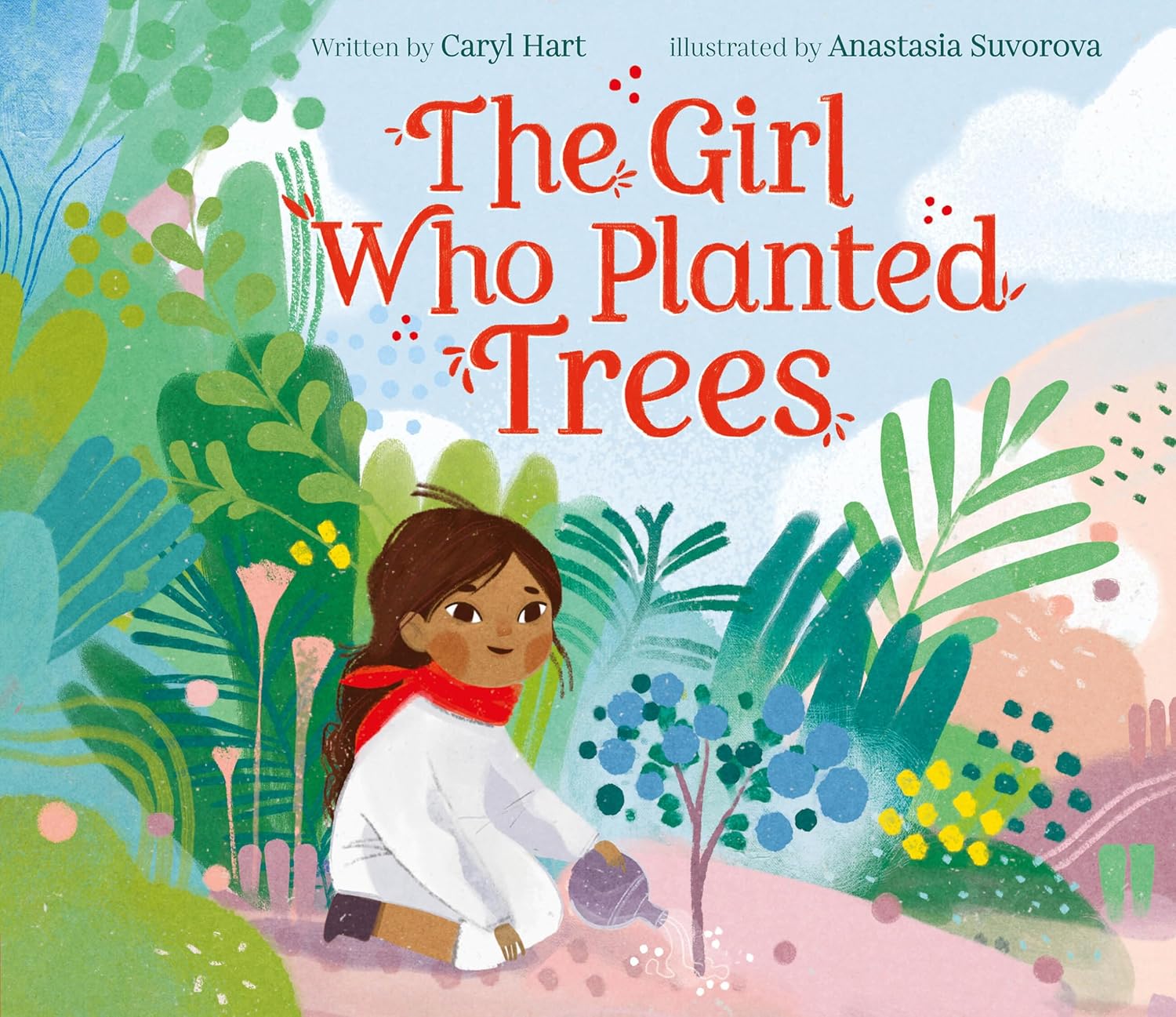
The Girl Who Planted Trees
Many story books involve a problem the characters in the story need to solve. When sharing books with children, we can begin to help them think and talk about how to solve problems. This helps children understand the story more deeply by drawing upon their own knowledge and experiences.
Let's get started!
The Book:
The Girl Who Planted Trees by Caryl Hart
Why we chose this book
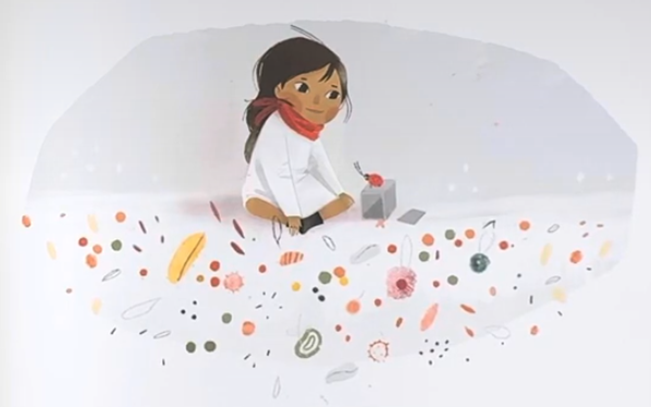
When the girl in the book realizes the big, gray mountain next to her town used to be covered in plants and trees, she wishes it could be like that again. But there’s a problem – how can she bring a whole forest back when’s she just one small girl? Determined to bring back the forest, the girl comes up with an idea. As new obstacles arise, she keeps finding ways to solve them. The story shows that even big challenges can be overcome when people work together.
While Reading the Story, Talk About Problem Solving
 First Reading
The first reading helps the child build their overall understanding of the story – in other words, it helps them understand the “big picture”. For this reason, it is important to keep the story moving. Keep your conversations with the child short, so the flow of the story isn’t disrupted.
The first reading is an excellent opportunity to talk about how the character in the story tries to solve the problem, to discuss the decisions the character makes or to make predictions about what she might do next.
Making thinking-out-loud comments
You can encourage these types of discussions by making thinking-out-loud comments. These are comments that allow the child to see how you are trying to understand the problem and the decisions the character makes. Unlike questions, comments don’t require a response. However, if you make a comment and then wait, the child may respond and add their own ideas. Here are a few examples:
- “The girl has an idea to help bring the mountain forest back. I wonder what her idea is.”
- “All the girl’s plants got destroyed in the storm. I wonder what she will do to solve this problem.”
- “I’m trying to figure out how she is going to get all her plants to the top of the mountain.”
Asking questions
Another way to deepen the child’s understanding of the story’s problem is to ask a question that draws on their knowledge, experience and reasoning skills.
 For example:
- “The mountain used to have a forest. How do you think we could help plants grow on a mountain that dry?”
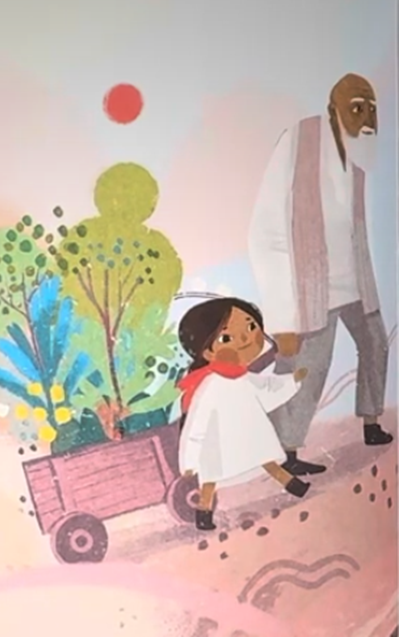
- “The girl needs to get her plants to the top of the mountain. How would you get them to the top?”
- “The storm destroyed all the plants. How would you protect them from a storm?”
After making a comment or asking a question, wait up to 10 seconds to give the child time to respond. If the child doesn’t respond or has difficulty answering the question, provide a suggestion or two and then continue reading.
Later Readings
Later readings are a great opportunity for deeper conversations, since the child is already familiar with the story. You can pause more often and spend longer talking, using thinking-out-loud comments and questions to explore the problems the girl faces and help the child connect these to their own knowledge and experiences. You can even extend problem solving by asking about a new challenge (e.g., What if there isn’t enough rain?) and waiting – the child may come up with creative solutions of their own. Reading a book at least three times supports these richer conversations and helps children deepen their understanding of the story.
Go Beyond the Book
Keep the conversation going beyond the story by reflecting on times when the child solved a problem. For example, “Do you remember the time we were away and couldn’t water our plants? How did we solve that problem?”
Books provide an excellent opportunity to talk about problem solving. Encouraging children to think and talk about problems in in stories and in their daily lives helps deepen their understanding and supports future reading and writing success!
Happy reading!