
“My Child Isn’t Progressing!” – Helping Parents Refocus on Interactions First
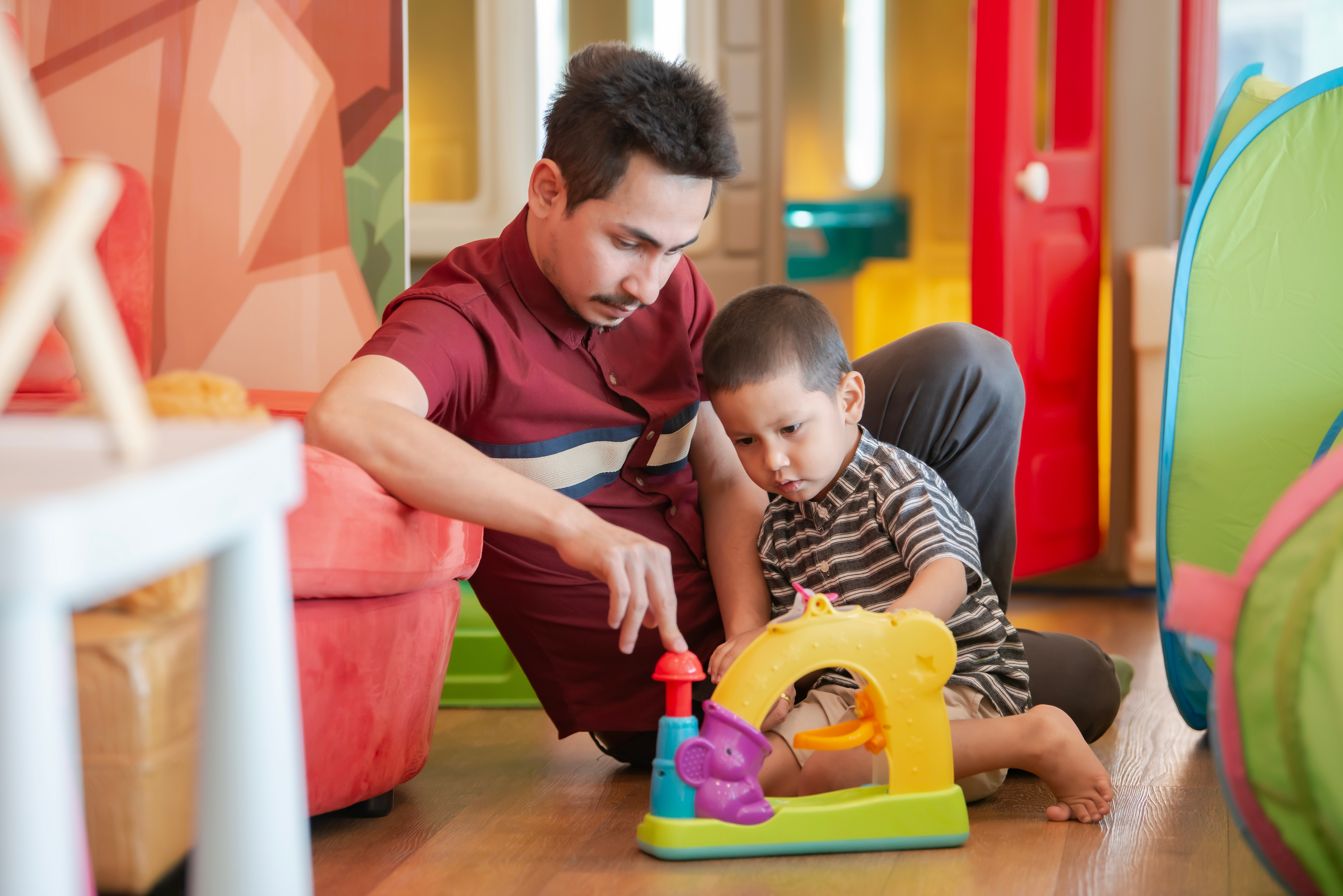
Let’s say you are meeting the family of a child with language difficulties for the first time.
When you ask the parent about their concerns, they say,
“He only says a few words and he’s not progressing even though I talk to him all the time and read to him every day.”
Then you observe the parent and child interacting as they play. You notice that the parent does talk to the child, but much of their talk involves giving directions and asking questions. The child responds to a few questions but mostly plays alone without engaging.
Have you encountered a situation like this?
It is natural for a parent who is concerned about their child’s language development to try to “get the child to talk.” This parent is looking for more words as a sign of progress. However, we know that children’s language development occurs in the context of enjoyable and extended interactions – and that is what’s missing here. When the child isn’t interacting often or isn’t given many opportunities to start the interaction, the parent needs your guidance to first focus on interaction goals.
 Research shows focusing only on the number of words used with children is not the most effective approach to supporting children’s language development.1
It’s more about more about quality interactions than quantity of words.1, 2 The kinds of interactions that are considered “quality interactions” involve motivating, back-and-forth parent-child interactions.
Let’s take a look a study that demonstrates the effect of quality parent-child interactions on children’s language development.
What the Research Says About Interactions
A study conducted with 60 children and their parents explored whether:
at 2 years of age

To evaluate the quality of the parent-child interactions, researchers:
- Analyzed 15-minute video recordings of each 2-year-old child interacting with their parent
- Rated the quality of parent-child interactions. Interaction quality was evaluated on key factors, including “joint engagement, shared routines and fluency and connectedness of exchanges” (Hirsh-Pasek et al., 2015, p. 1081)
- Recorded the number of words parents used within their interactions with their child
At 3-years, each child’s language abilities were assessed using the Reynell Developmental Language Scales, a norm-referenced tool. Children’s language abilities were organized into three levels:
The child’s score was at the 33rd percentile or below
The child’s score was between the 34th and 66th percentile
The child’s score was at
the 67th percentile or above
RESULTS
The study shows two key outcomes:
Lower-quality parent-child
interactions at 2-years-of age…
Experiencing higher-quality interactions with their parents
(adapted from Hirsh-Pasek et al., 2015)
What this means for your practice
This study is a good reminder that, if a child is not yet consistently engaged in enjoyable, extended, back-and-forth interactions, then their parent’s frequent language models may not lead to meaningful gains.
Our role is to support and coach parents so they learn to start by engaging their child in extended, enjoyable interactions.
Key takeaways
Here are five things you can do with the families you work with to help them build high-quality interactions first:
Coach parents to let their child lead interactions by starting the interaction | |
Encourage parents to think about what their child is interested in, wants to communicate about, and finds motivating. This way, their focus is always on building on what interests the child | |
Guide parents to follow their child’s lead by responding promptly and warmly, and by saying something directly related to what their child has communicated | |
Encourage parents to keep the interaction going with their child by waiting to see what the child says or does next and then continuing to follow their lead | |
Support parents to plan how they will use the interaction strategies they are learning on their own in meaningful activities and routines in the child’s everyday life |
Are you interested in an evidence-based approach to coaching parents so you can support meaningful change in children’s and families’ everyday lives? 
- The It Takes Two to Talk® certification workshop gives you all the tools to coach parents with confidence, build effective everyday communication in families, and make your intervention more effective where it matters most - in real life.
- Check out the It Takes Two to Talk parent guidebook, for more information about helping parents build children’s communication and language skills within fun, everyday interactions
Similar articles by tag:
Conversation | Language Development | Follow the Child’s Lead | Interaction | Parent Coaching