

This month's Book Nook topic is...
Building Sound Awareness with
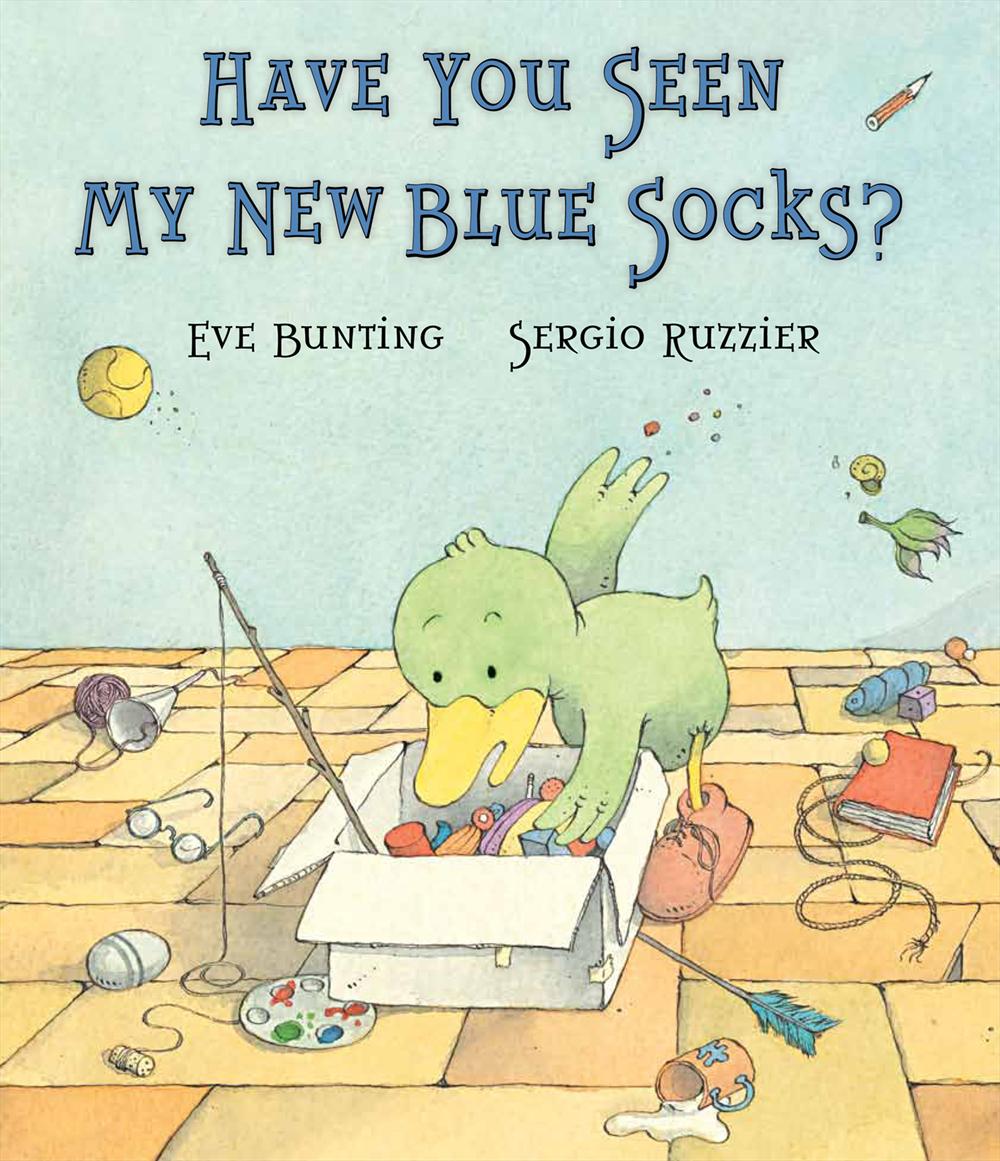
Have You Seen My New Blue Socks?
Before children learn to read, they need to understand that words are made up of smaller parts like syllables, rhymes, and individual sounds This skill is known as sound awareness (or phonological awareness), and it is a foundational skill for learning to read and write.
One important part of sound awareness is recognizing rhymes. When you read together, you can help the child think about rhyming words and build their sound awareness skills using a strategy called Listen… and Find One Like It.
Let’s look at an example of supporting children’s sound awareness using rhymes!
The Book:
Have You Seen My New Blue Socks?
Written by Eve Bunting
Illustrated by Sergio Ruzzier
Why we chose this book
In this story, a little duck searches for a pair of lost socks by asking friends like Fox, Ox, and a family of peacocks where they could be. The book’s rhyming lines, fun illustrations and silly resolution are simple for children to follow.
Listen… and Find One Like It
This strategy has two simple steps:
Step 1 – Listen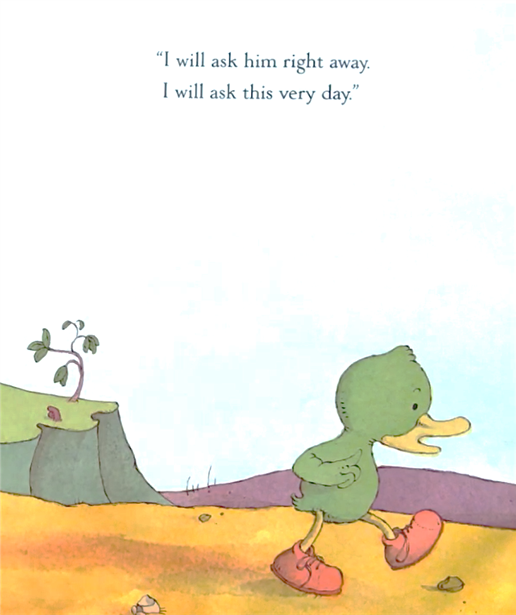
As you read, draw the child’s attention to the words that rhyme by emphasizing them. Stress the rhyming words so that the child hears that they sound the same at the end.
For example, when reading:
“I will ask him right AWAY,
I will ask this very DAY.”
You could say: “Listen: AWAY… DAY. That rhymes! AWAY and DAY sound the same at the end. AWAY… DAY!”
Step 2 – Find One Like It
Next, encourage the child to think of another rhyming word that matches this pair. You could say, “Let’s think of another word that rhymes with AWAY and DAY.”
Wait up to 10 seconds for the child to respond. At first, many young children may find rhyming challenging. It should not feel like a test. If, after waiting, the child seems unsure of how to respond, you can simply model another rhyme yourself. For example, you could say: “Hmmm. What about, SAY? Listen: AWAY, DAY and SAY all rhyme! They all sound the same at the end of the word.”
This strategy works best when it builds on what the child is already talking about or interested in. Using words tied to the child’s focus makes it easier for them to notice and compare the sounds in words, rather than shifting their attention to a new topic.
The first reading
The first time you read Have You Seen My New Blue Socks?, respond to what interests the child about the book, but keep the story moving. You might have short conversations to help the child remember the main parts of the story.
 Instead of stopping to talk about rhymes, begin building sound awareness by simply emphasizing the rhyming words as you read.
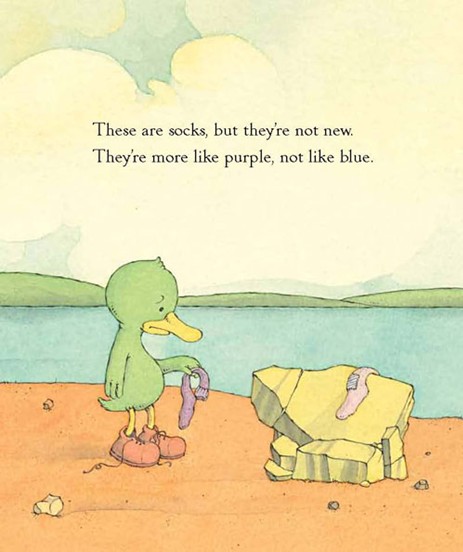
For example, on the page where the duck is down by the rocks, you could slow your pace and exaggerate the rhyming words:
“These are socks, but they’re not NEW.
They’re more like purple, not like… BLUE.”
If you pause before the second rhyming word (i.e., BLUE), the child may even jump in to say it themselves.
Later readings
Once the child understands the story, later readings are opportunities to have longer back-and-forth conversations about the book. As you read together, wait to see what interests the child. When the child talks about the story or a picture, build on what they say by drawing attention to words that rhyme.
This is a natural time to start using the Listen… and Find One Like It strategy.
If the child says, “That’s purple socks!”
You could respond by saying, “Yes, the duck only finds purple socks on the rocks!”
Then, add Listen… and Find One Like It: “Listen, Socks and Rocks rhyme! They sound the same at the end. What’s another word that rhymes with Socks and Rocks?” Wait for the child to respond. If this is the first time you’re using the strategy, they may need you to Find One Like It by modelling another rhyming word yourself.
The wonderful thing about rhyming is that it’s a naturally silly activity, which makes it motivating for the child to try it out. When you use the Listen… and Find One Like It strategy, the child may come up with nonsense words – like Nox or Splocks. In fact, even these made-up words help to build children’s sound awareness, so be sure to respond positively letting the child know that their words do rhyme!
Using Listen… and Find One Like It throughout the day
As the child practices their sound awareness skills, you can move beyond the book and use the Listen… and Find One Like It strategy during everyday activities.
For example, if the child is putting on their shoe and says, “My shoe’s on!” you could respond by saying, “Yes, You put on your Shoe! Oh, listen! You and Shoe rhyme. They sound the same at the end of the word. Let’s think of another word that rhymes with You and Shoe.”
Give the child time to respond by waiting up to 10 seconds. Remember, early on, you may need to be the one to Find One Like It.
Learning to read can be a climb… but it’s much more fun when you rhyme!
Happy reading!
More Resources
The strategies in this Book Nook post are drawn from Hanen’s practical, research-based guidebooks for building emergent literacy. Explore the links below to learn more about how these guidebooks can support you.
For Parents I'm Ready! guidebook
For Educators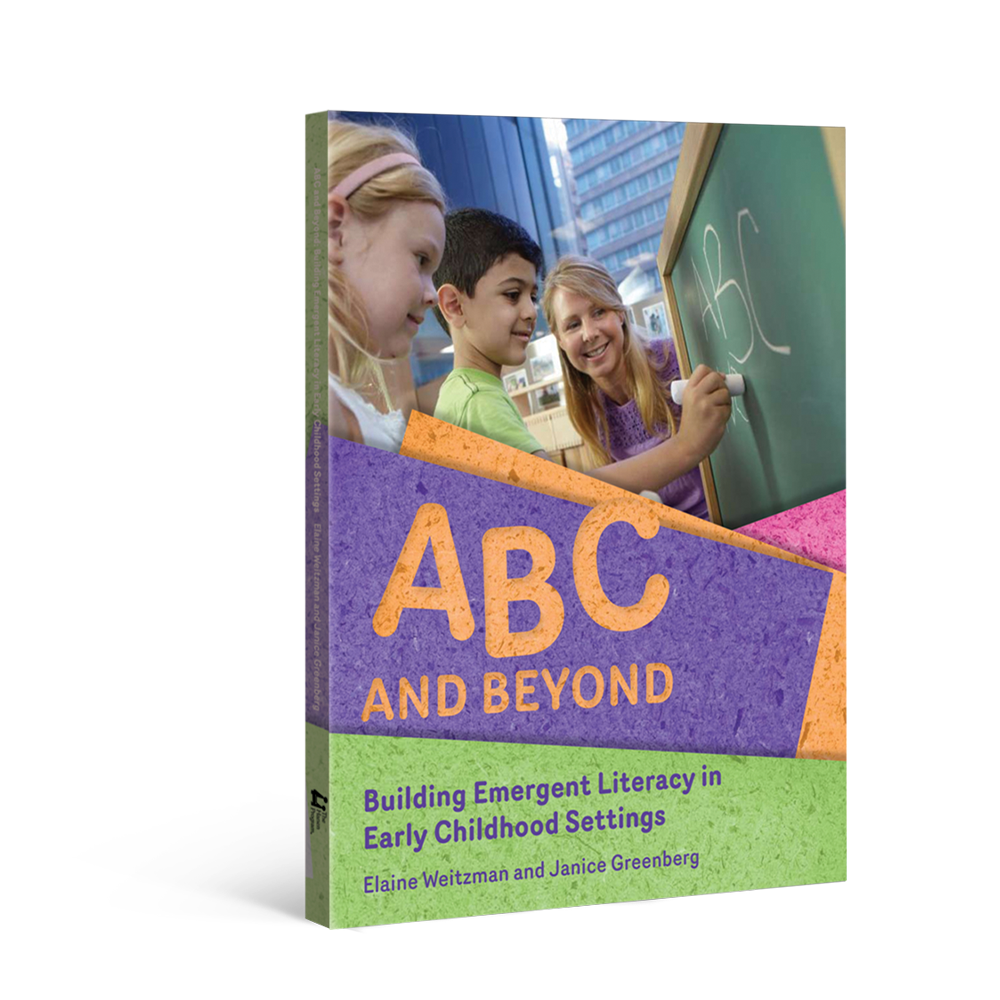 ABC and Beyond guidebook